“Inside the secret nightly routines of the world’s longest-living people revealed at last.”
The Insider’s Secret: Why Sleep Is the Real Longevity Elixir
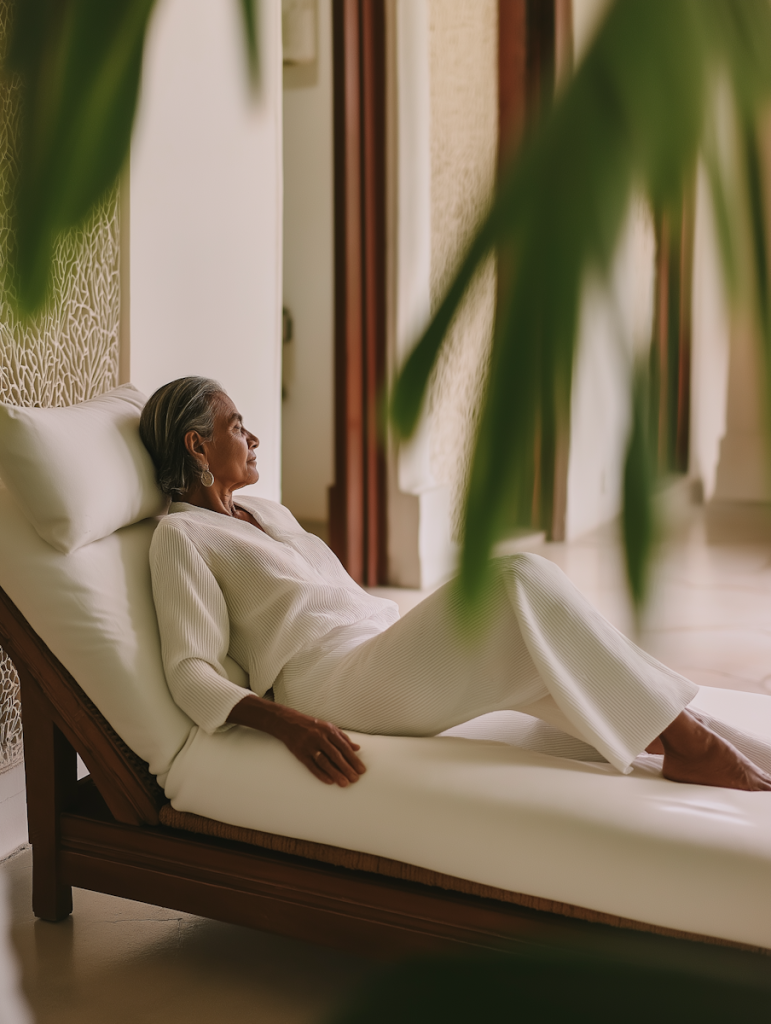
If you ask most people what keeps them healthy, they’ll talk about diet, exercise, or supplements. The longest-lived people rarely start there. They’ll speak, almost reluctantly, about the hours before dawn and the hours after dusk the spaces where the body restores, repairs, and prepares for another day.
In Okinawa, centenarians refer to sleep as “the invisible meal.” In the mountains of Sardinia, elders describe it as “the deep reset.” They’re not talking about simply getting enough hours; they’re talking about a ritual a crafted entry into rest. If you want to know their secrets, you have to be willing to look beyond what’s in your medicine cabinet, and deeper into the quiet, curated habits that turn rest into longevity
Ritual #1 – The Wind-Down Hour
In the Nicoya Peninsula of Costa Rica, dinner is rarely a late-night affair. Meals are finished before the sun sets, and the last hour before bed is a slow unraveling. No blue light. No rushing thoughts. This isn’t just “screen-free time” it’s a sensory retreat.
They’ll light a single candle. They’ll sip chamomile infused with fresh-picked herbs. They’ll hum a low song they learned from their grandparents. The message to the body is clear: We are entering rest now.
Ritual #2 – Temperature as a Signal
You won’t find a thermostat in most Blue Zone homes. Instead, people use nature’s temperature drops as a cue to sleep. In Ikaria, Greece, windows are thrown open to let the evening breeze in. In Sardinia, the stone walls release the heat they’ve held all day, cooling rooms to an ideal sleeping temperature.
The science is clear: a cooler body temperature encourages deeper sleep. But here, it’s more than science it’s an unbroken tradition, passed down like a family recipe.
Ritual #3 – The Pre-Sleep Story
This may be the most overlooked ritual of all. In Ogimi, Okinawa, grandparents still tell stories at night not just to children, but to each other. Folktales, life events, even short philosophical musings.
The effect is subtle but profound. Stories quiet the analytical mind. They draw you into a slower rhythm. And they ensure that, night after night, you drift off in a state of human connection, not mental chaos.
Ritual #4 – The Bed That Breathes
Mattresses here are not overly plush. In fact, in many longevity-rich regions, people sleep on simple, breathable materials – tatami mats in Japan, handwoven wool in Sardinia.
Why? Because these surfaces encourage the body to shift naturally during the night, improving circulation and reducing stiffness. The bed is a tool, not a trap.
Ritual #5 – The Rhythm of Darkness
Streetlights are scarce in these regions. At night, true darkness settles in, and the body’s melatonin production is left undisturbed.
In modern cities, this can be replicated with blackout curtains or a silk sleep mask but the principle is the same. Darkness is not the absence of light; it’s the presence of rest.
Ritual #6 – Micro-Naps, Not Power Naps
In Ikaria, naps are not indulgent they’re scheduled. Twenty minutes, early afternoon, often after a light lunch. These naps don’t replace night time sleep; they enhance it.
Research backs this up: short naps can reduce stress hormones and lower the risk of heart disease. But here, it’s not just about health it’s about living in alignment with your body’s natural energy cycles.
Ritual #7 – Waking Without an Alarm
In the Nicoya Peninsula, alarm clocks are rare. The body wakes when it’s ready often with the sunrise. This means they go to bed early enough to get the sleep they need without mechanical interruption.
It’s the opposite of the modern approach, where we shave off rest to fit into our schedules. Here, the schedule bends to fit the body.
Ritual #8 – Gratitude Before Sleep
In Sardinia, elders end the day with a short moment of thanks not a long meditation, just a single thought of gratitude.
Science might explain it as reducing stress and promoting better sleep, but they don’t talk about it in those terms. For them, it’s about ending the day well. And when you end the day well, the night and the years follow suit.
Why This Matters for You
The longevity effect isn’t found in any one ritual. It’s the layering of them the cooling air, the candlelit hour, the unhurried storytelling. It’s the mindset that sleep is not the pause between days, but the foundation on which each day is built.
Modern life has taught us to hack, optimize, and shortcut. The world’s longest-lived people teach us something more powerful: to design our rest as carefully as we design our work.
The Quiet Invitation
If you’ve ever envied the vitality of a 100-year-old farmer in Sardinia or the serene face of a 95-year-old Okinawan gardener, you now know part of the reason. It’s not luck. It’s not magic. It’s ritual.
And rituals can be learned.
The question is will you treat your nights as something sacred enough to protect? Or will you keep letting the best hours of your life slip quietly away?
Because in the end, longevity is not about counting years. It’s about ensuring the years you have are deeply, beautifully lived one night of real rest at a time


LFG